Et handicap er ikke et tal du får én gang og så er det dit. Det lever, og det er de tællende runder der holder liv i det. Hver gang du spiller en runde der tæller, fortæller du systemet noget nyt om hvordan du faktisk spiller lige nu. Uden tællende runder fryser dit handicap, og så siger det mere om fortiden end om din nuværende form. Her er hvad en tællende runde er, hvordan du registrerer den, og hvordan den lander i dit handicap.
Hvad er en tællende runde?
En tællende runde er en runde der spilles efter golfreglerne og noteres med en markør, så scoren kan tælle med i dit handicap. Det er forskellen mellem en uformel runde med vennerne, hvor I bare nyder dagen, og en runde hvor du på forhånd siger at den her skal tælle. To ting skal være på plads: du spiller efter reglerne på en bane med en gyldig rating, og en markør følger med og bekræfter din score. Er begge dele opfyldt, er runden i princippet en tællende runde.
Det er værd at vide at en tællende runde ikke behøver at være en turnering. En helt almindelig privatrunde kan godt tælle, så længe formalia er på plads. Det er netop derfor det meste af dit handicap typisk bygger på privatrunder og ikke på store konkurrencedage.
De praktiske trin
Selve fremgangsmåden varierer fra klub til klub, men i mange klubber følger det her samme grundmønster. Tjek altid med din egen klub, for procedurerne er ikke ens overalt.
Sådan registrerer du en tællende runde
- Tilmeld runden som tællende, før du går ud. I mange klubber skal du markere på forhånd at runden skal tælle, typisk i klubbens system eller via golfboksen. Det er den vigtigste detalje: beslutningen tages før første slag, ikke bagefter.
- Hav en markør med. Du spiller sammen med en markør, som regel en medspiller, der noterer din score hul for hul. Markøren er der for at bekræfte at runden er spillet ærligt og efter reglerne.
- Noter og godkend scoren bagefter. Når runden er slut, tjekker du scorekortet igennem, og både du og markøren godkender det. Det er her I sammen bekræfter at tallene passer.
- Indsend runden. Til sidst indsendes den godkendte score til klubben eller systemet, så den kan behandles og indgå i dit handicap. I mange tilfælde sker det digitalt med det samme.
Nøglen gennem alle fire trin er ærlighed og dokumentation. En tællende runde virker kun fordi alle stoler på at scoren er rigtig, og det er markøren og godkendelsen der bærer den tillid.
Hvordan runden indgår i dit WHS-handicap
Når en tællende runde er indsendt, bliver den ikke bare lagt oven i de andre. WHS-handicappet bygger på grundprincippet bedste 8 af dine seneste 20 tællende runder. Systemet kigger altså på dine 20 nyeste scores, tager de otte bedste og regner et gennemsnit ud derfra. Det betyder at en enkelt elendig dag ikke ødelægger dit handicap, og en enkelt heldig runde heller ikke kan løfte det kunstigt. Vil du have hele mekanikken, har vi skrevet den ud i sådan fungerer WHS-handicappet.
Den praktiske konsekvens er enkel: jo flere tællende runder du spiller, jo mere retvisende bliver dit handicap. De nyeste runder skubber langsomt de ældste ud af de seneste 20, så tallet følger med din form i stedet for at hænge fast i hvordan du spillede for et år siden.
Hvor Golfsocial og DGU kommer ind
Det administrative kan godt føles tungt, og den klassiske irritation er dobbeltindtastning: du noterer scoren ét sted og skal så skrive den ind et andet sted bagefter. Det er præcis den friktion Golfsocial er bygget til at fjerne. Gennem den officielle integration med Dansk Golf Union holdes dine tællende runder synkroniseret, så det du registrerer ét sted, ikke skal skrives ind igen et andet sted.
Et vigtigt forbehold: Golfsocial udsteder ikke handicap, og vi laver ikke om på reglerne. Det er Dansk Golf Union der forvalter dit officielle handicap. Golfsocials rolle er at gøre det lettere at registrere, dele og følge med, mens selve handicappet ligger der hvor det hører hjemme, hos DGU. Tænk på det som et lag der fjerner besværet, ikke et lag der erstatter systemet.
Sådan gør Golfsocial det nemt
I appen taster du runden ind ét sted, hul for hul, og så er den der. Også det slag på hul 12. Især det. Du logger den én gang, og derfra bliver den liggende: den godkendte score, markøren, hele runden. Du skal ikke huske at skrive den samme score ind igen et andet sted bagefter, for Golfsocial holder den i sync for dig.
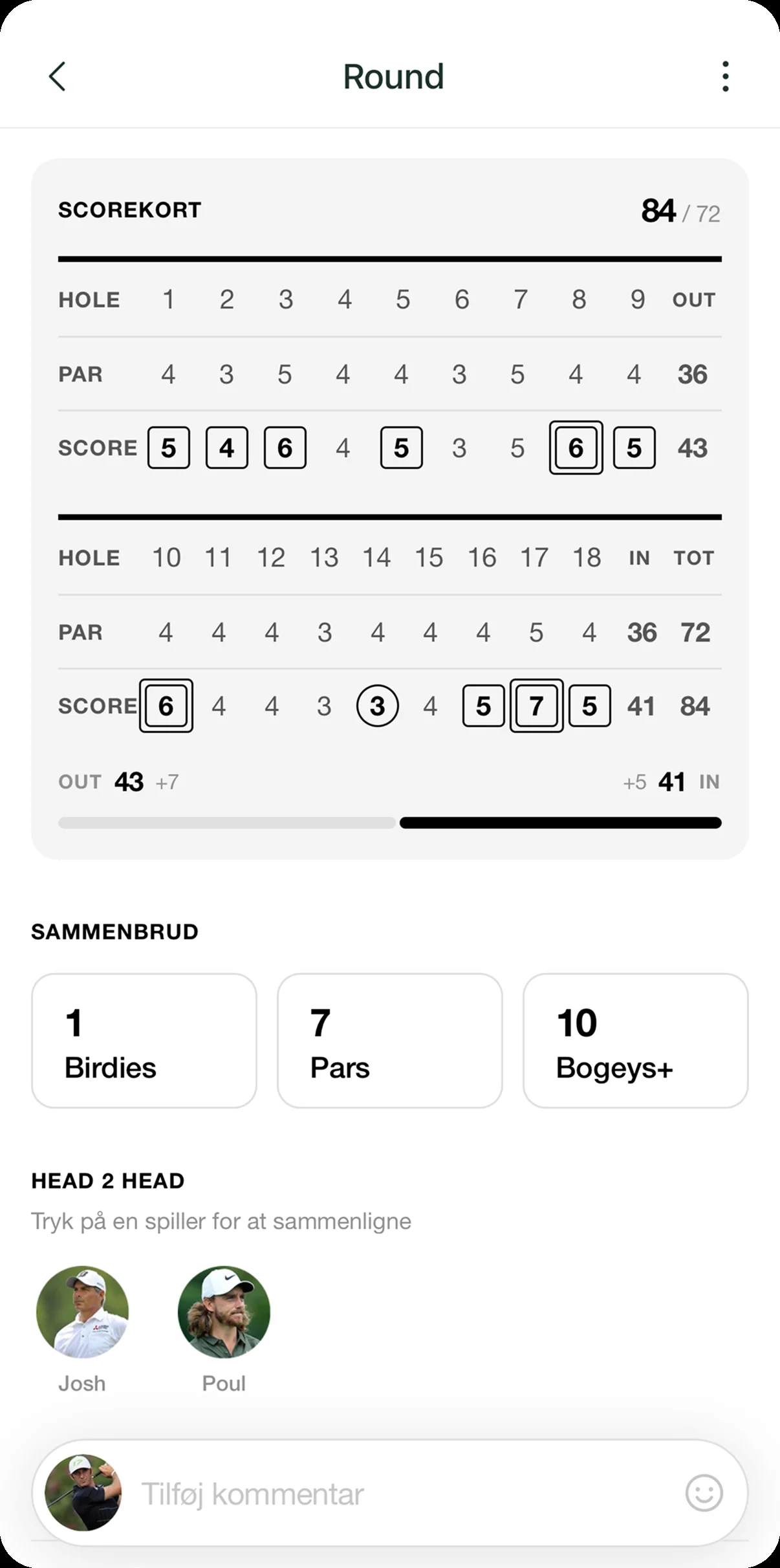
Synkroniseringen sker gennem den officielle integration med Dansk Golf Union, så dit WHS-handicap holdes opdateret uden dobbeltindtastning. Golfsocial udsteder ikke selv handicappet; det forvalter DGU. Vi sørger bare for at runden, du lige har spillet, lander det rigtige sted uden ekstra besvær.
Til sidst
En tællende runde er i bund og grund bare en runde du har besluttet skal betyde noget: spillet efter reglerne, noteret af en markør, godkendt og indsendt. Gør du det jævnligt, holder du dit handicap levende og retvisende, og med Golfsocial og DGU-integrationen sker det meste af det administrative af sig selv. Tjek detaljerne med din egen klub, tag en markør med, og lad runderne tælle.



En hilsen fra banen.
Ingen støj. Kun når vi har noget at fortælle.